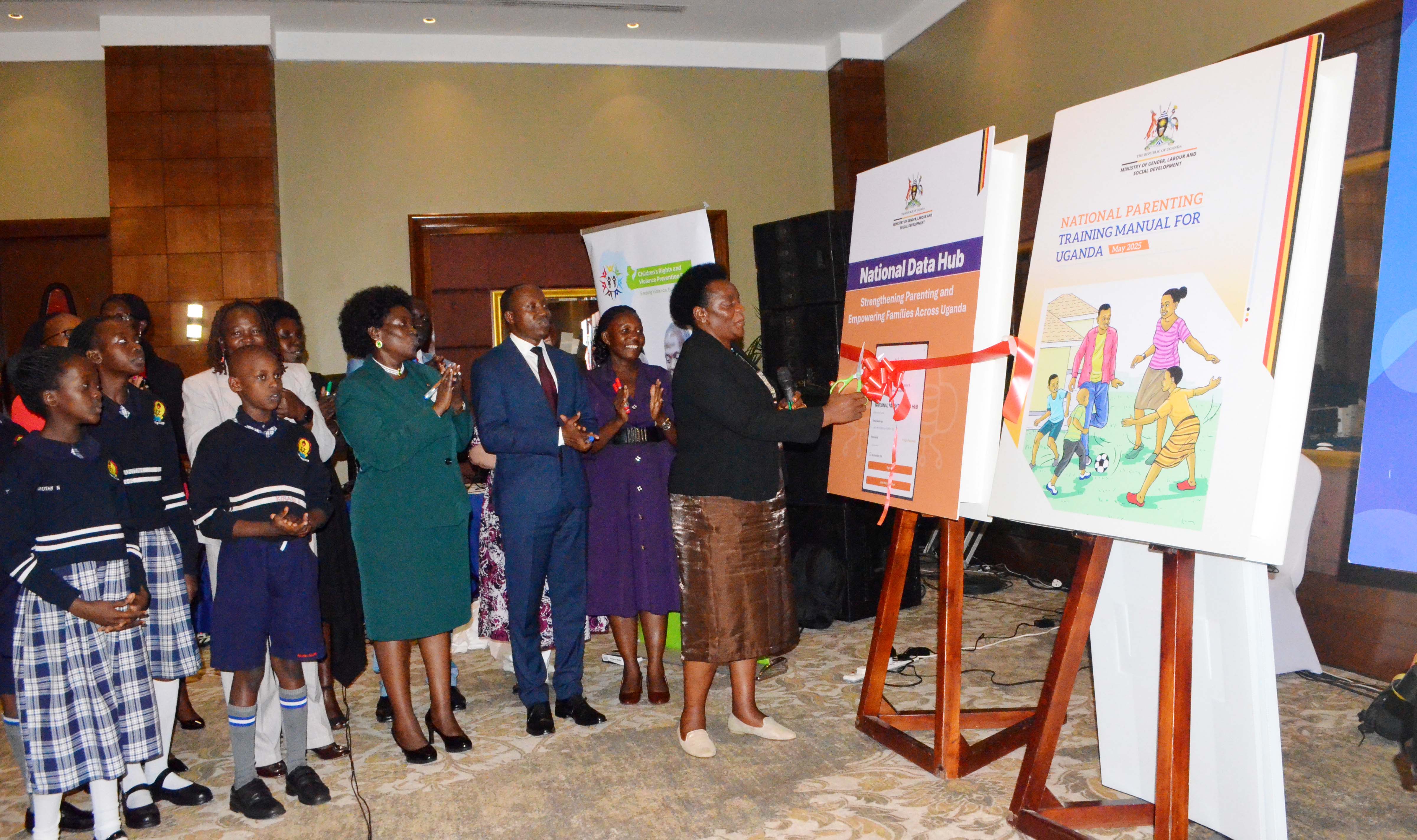
National Parenting Data Hub providing clear, accessible information and statistics to support families, caregivers, and policymakers.
National Launch of the National Parenting Standards, Uganda National Manual, and Facilitators’ Guide and the National Data Hub
On 30th July CHDC, in partnership with the Ministry of Gender, Labour and Social Development (MGLSD), UNICEF and other stakeholders, organised the International Day of Families under the theme “The Impact of Urbanisation on Families in Uganda.”
During the celebrations held at Sheraton Hotel, Kampala, State Minister for Gender and Culture Affairs, Hon. Peace Mutuuzo, officially launched a set of National Parenting Tools aimed at strengthening family systems and improving child development. These tools include the National Parenting Data Hub, National Standards for Parenting Programmes in Uganda, and the National Parenting Training Manual and Facilitators’ Guide.
According to Hon. Mutuuzo, the tools are designed to measure parenting standards, coordinate stakeholders in the parenting sector, promote consistent follow-up, and ensure interventions are rooted in Uganda’s cultural and social context. She described the launch as a milestone in promoting positive parenting, safeguarding children, and responding to evolving family challenges.
‘Parenting, which was once passed down through word of mouth, is now documented. Even those without biological parents can use these guidelines to raise children in line with acceptable standards,” she highlighted.
Delivering the keynote address, Dr. Godfrey Siu, a Senior Lecturer and Programme Lead for the Families, Parenting and Child Health Programme at CHDC, painted a vivid picture of the pressures facing families in Uganda, particularly in urban areas.
He noted that while cities provide opportunities such as better education, healthcare, and jobs, they also impose heavy financial burdens. The high costs of rent, land, and school fees, combined with rising living expenses, are stretching families to breaking point.
Urban parents, Dr. Siu explained, often work long hours in competitive job markets or run small businesses in streets and markets. Single parents, in particular, face exhaustion as they juggle income generation with caregiving responsibilities.
This environment, he warned, has led to increasing marital instability, family disintegration, domestic violence, deteriorating mental health, and heightened vulnerability—especially among women, children, and youth. Depression and hopelessness are becoming more common in urban slum communities.
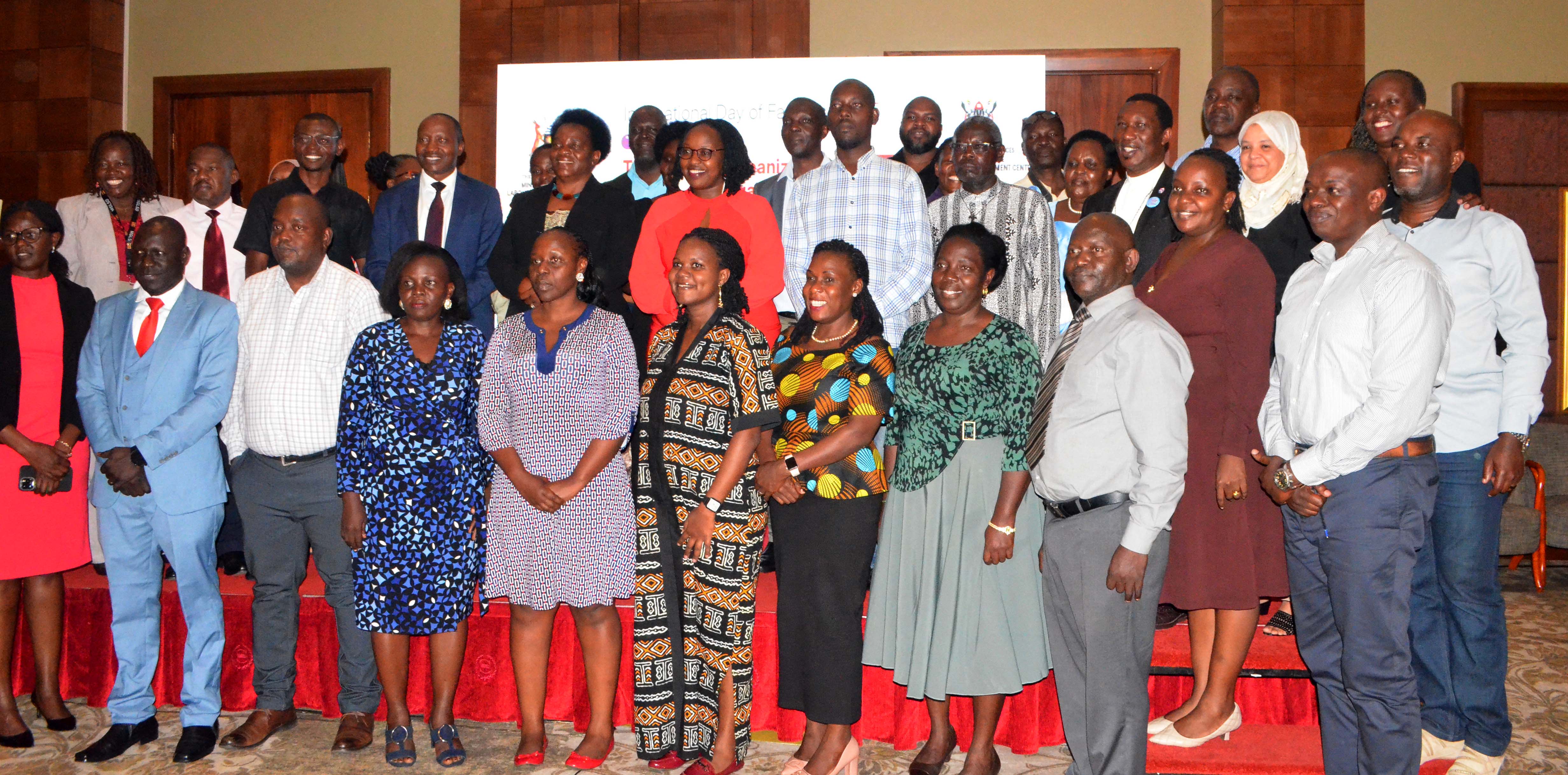
Members of Parenting Agenda take a photo moment during the celebration of International Day of Families at Sheraton Hotel in Kampala
Dr. Siu urged policymakers to recognise caregiving as a core element of urban life. He called for fairer maternity and paternity policies, as well as support for proven parenting programmes such as Real Fathers, Parenting for Respectability (PfR), and the Care for Child Development model developed by UNICEF and the World Health Organization.
He further emphasised that the Ministry of Gender’s Uganda Parenting Agenda Initiative is already well-positioned to coordinate national strategies, set common standards, and promote scalable, evidence-based programmes that address the effects of rapid urbanisation on families. “True progress is not measured by economic metrics alone, but by the strength of family bonds. Thriving families are the resilient core of society,” Dr. Siu stressed.
Statistics
Uganda currently has 11 cities, 31 municipalities, and 533 town councils. The country’s urbanisation rate stands at around 27%, with an annual growth rate of 4.5%. In 2024, the urban population was estimated between 10–13 million people, largely driven by rural-to-urban migration. While urbanisation presents opportunities, Dr. Siu warned that it also comes with deep social challenges that cannot be ignored.
UNICEF’s Call to Action
Ms. Margarita Tileva, Deputy Representative for Programmes at UNICEF, underscored the need to integrate children’s rights and needs into urban planning and policies. She called for collective efforts to create child-friendly cities that put children’s wellbeing at the centre of development.
“This can be achieved through evidence-based planning that equitably responds to the priorities of children and their families, including those in slums and informal settlements,” she said. “We must also involve citizens and children themselves in urban planning initiatives.”